Hours And Schedule
Opens At 09:00
Opening Hours
Special Hours
Important Notes
Last entry (individual tickets) is at 18:30; ticket office closes at 18:00. Entry requires a paid ticket (standard €5; reduced €2 for EU ages 18 - 25; free for under 18 and residents of the Municipality of Rome). Free entry is available during Holy Mass for worship only; ticket sales are suspended 1 hour before liturgical activities. Tickets are nominal (name must match ID); timed-entry slots are used.
Visit Timing
Best Time To Go
The Pantheon is at its calmest earlier in the day, making it easier to appreciate the interior (oculus, dome proportions, marble floor) without dense crowds. Lines tend to build quickly from late morning onward as day-trippers and tour groups arrive.
Aim to arrive 10 - 20 minutes before opening for the shortest wait. If you can’t go early, a secondary good window is late afternoon on weekdays (roughly 16:00 - 18:00), when some tour groups thin out. Evenings are limited by closing hours, but the piazza atmosphere outside can be especially pleasant after sunset.
Seasonal Guide
These shoulder seasons usually balance comfortable temperatures with good light and a lively but more manageable visitor load than peak summer. They’re also great for combining the Pantheon with long walks between nearby sights (Piazza Navona, Campo de’ Fiori, Trevi) without extreme heat.
Climate: Spring and autumn typically offer mild to warm days and cooler evenings. Rain showers are possible; rain can be a feature, not a drawback, because the Pantheon’s open oculus lets you experience the iconic raindrop effect and floor drainage design (bring a light jacket/umbrella for the piazza).
Summer (June - August) is hottest and most crowded; visit at opening time and plan shade breaks. Winter (November - February) is cooler with fewer crowds; it can be a very good value for queue avoidance, though shorter daylight and more unsettled weather may affect comfort outdoors.
Peak hours
Packing Guide
By Season
Extra Tips
Tours And Guides
The Pantheon is a high-traffic, timed-entry site; guide and audio-guide offerings are frequently sold as bundled packages (ticket + reserved entry + audio guide or live guide). Language sets and pricing can change by season/provider and may differ between official channels and third-party sellers, so visitors should verify languages and redemption/pickup instructions on the specific product page at purchase time.
Expert Guides
How to book Typically booked online in advance via tour operators/marketplaces (e.g., official ticketing partners or major tour platforms). Some guided tours may also be arranged through licensed guides in the historic center, but advance booking is recommended due to timed entry and high demand.
Audio Tours
Most commonly obtained by purchasing an audio-guided option online (QR/app-based audio guide or voucher redemption). Limited on-site availability may exist depending on the operator managing services at the entrance area, but travelers should not rely on walk-up audio-guide device rental; pre-purchase is recommended.
App Guides
Online Experiences
Third-party virtual tours and online video/360 experiences are available on the web (not typically an on-site rental). Availability, language, and pricing vary by provider; many are free (video/360) while some guided livestream-style tours are paid.
Top activities
How to Get There
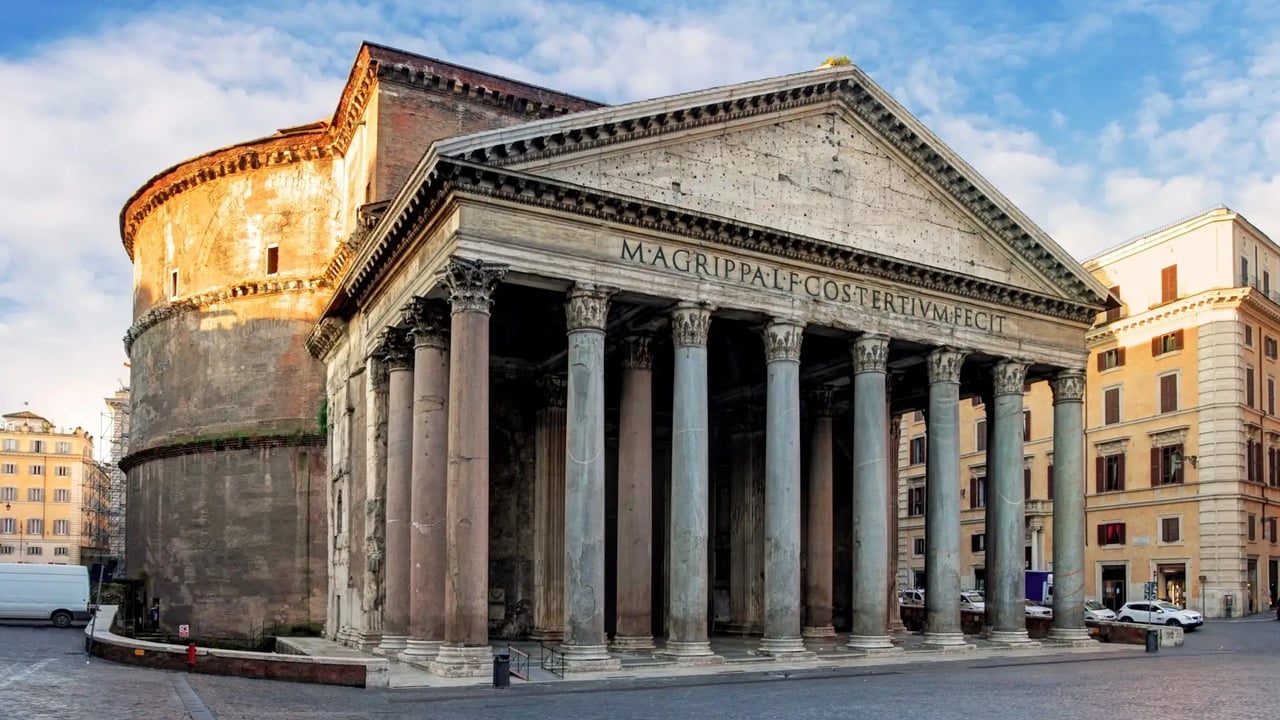
The Pantheon is located in the historic center of Rome (Centro Storico), within the rione (historic district) of Pigna, in Piazza della Rotonda. It sits in a dense, pedestrian-friendly area of narrow streets and small squares that showcase Rome’s layers of ancient, medieval, and baroque city life. Nearby notable places include Piazza Navona (a short walk northwest, famous for Bernini’s Fountain of the Four Rivers), Campo de’ Fiori (to the southwest, known for its market and nightlife), the Trevi Fountain (to the east), and the Spanish Steps (farther northeast). It’s also close to major religious and cultural sites such as the Church of Sant’Ignazio di Loyola and the Basilica of Santa Maria sopra Minerva (one of Rome’s key Gothic churches). This part of Rome is special because it is one of the best-preserved and most atmospheric areas of the city: you can move easily on foot between world-class monuments, lively piazzas, historic cafés, and artisan shops, often encountering significant architecture around nearly every corner. It’s worth visiting not only to see the Pantheon itself - one of the most influential buildings of the ancient world, famed for its massive unreinforced concrete dome and central oculus - but also because the surrounding Centro Storico offers a quintessential Rome experience, especially in the early morning or evening when the streets and piazzas feel most evocative.
Local Legends
Visitors often hear a cheerful claim: even though the Pantheon’s dome has a big open circle at the top (the oculus), rain won’t “mess up” the interior. The fun is discovering the truth is half engineering, half surprise - when it rains, drops can fall in, but the floor is subtly designed to handle water and guide it away. The result is more like a gentle indoor weather moment than a problem.
Background
Guides and locals have long repeated this as a playful bit of Rome wisdom, inspired by the building’s famously clever ancient design: the slightly sloped floor and discreet drainage points.
Impact On Visitors
It turns a simple architectural feature into a memorable talking point. People often look up with extra curiosity, hoping to catch a “weather cameo” through the oculus and admire how thoughtfully the space works.
Additional Details
On bright days, the oculus acts like a moving spotlight. On cloudy days, it can feel like a natural mood lamp. Either way, the idea that a centuries-old building can calmly handle the elements adds to its reputation as a marvel that still feels modern.
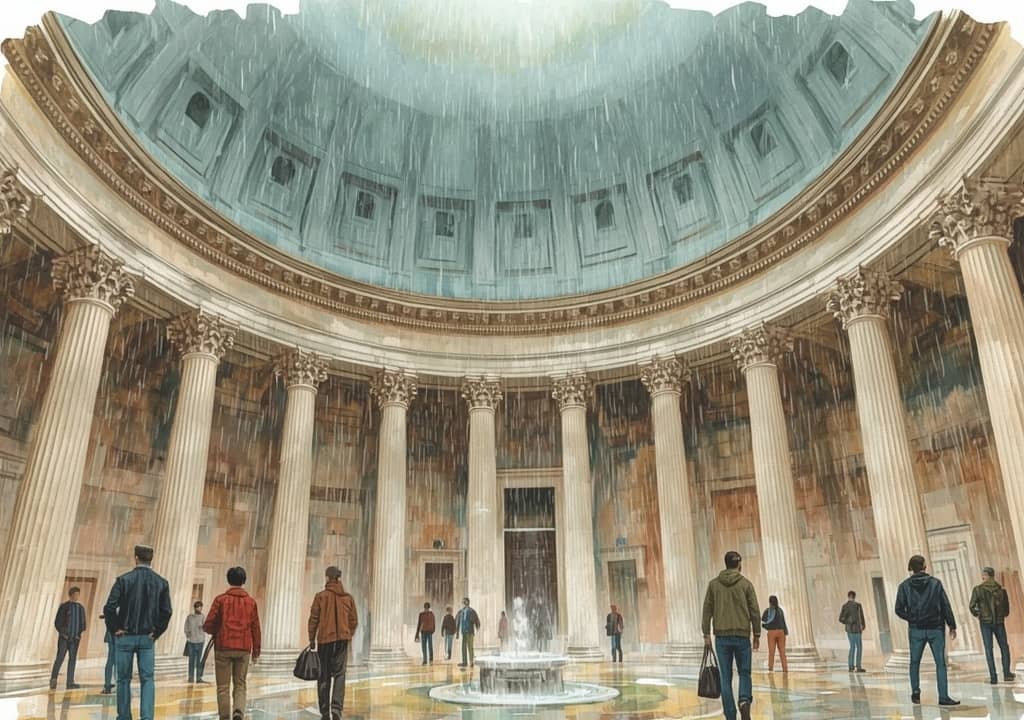
A popular story says the dome is so huge that ancient builders must have used special tricks - sometimes people even claim they mixed in secret materials to make it float-like. The reality is already impressive: the concrete recipe changes as it rises, using lighter components higher up, and the patterned sunken panels (coffers) reduce weight while adding style.
Background
The Pantheon’s dome was the largest of its kind for centuries, so it naturally attracted imaginative explanations. Over time, awe turned into playful rumors about magical mixtures, when the real explanation is smart Roman engineering.
Impact On Visitors
It makes tourists look at the ceiling longer, trying to spot the “trick.” Even when they learn it’s engineering rather than magic, the story frames the dome as a puzzle to admire, not just a ceiling to photograph.
Additional Details
The coffers aren’t only decorative; they help manage the dome’s mass. Many visitors enjoy comparing it to modern stadium roofs or planetarium domes - then realizing this was achieved with ancient methods and bold design choices.

A lighthearted tale describes the Pantheon as a grand indoor sundial: as the sun moves, a bright circle glides across the interior, “highlighting” different features like a cosmic stage light. Some versions playfully suggest the building is ‘winking’ at you when the beam lands near the entrance or across the floor.
Background
Because the oculus is the main source of direct sunlight, the shifting beam is dramatic and easy to notice. Over generations, people turned that daily motion into a story of timekeeping and theatrical design.
Impact On Visitors
It encourages visitors to slow down and watch. Many try to time their visit to see the light circle in a particular spot, making the experience feel like catching a natural performance.
Additional Details
The effect is strongest on sunny days and changes with the seasons. The moving light helps people sense the building as a living space rather than a static monument - one that changes hour by hour.
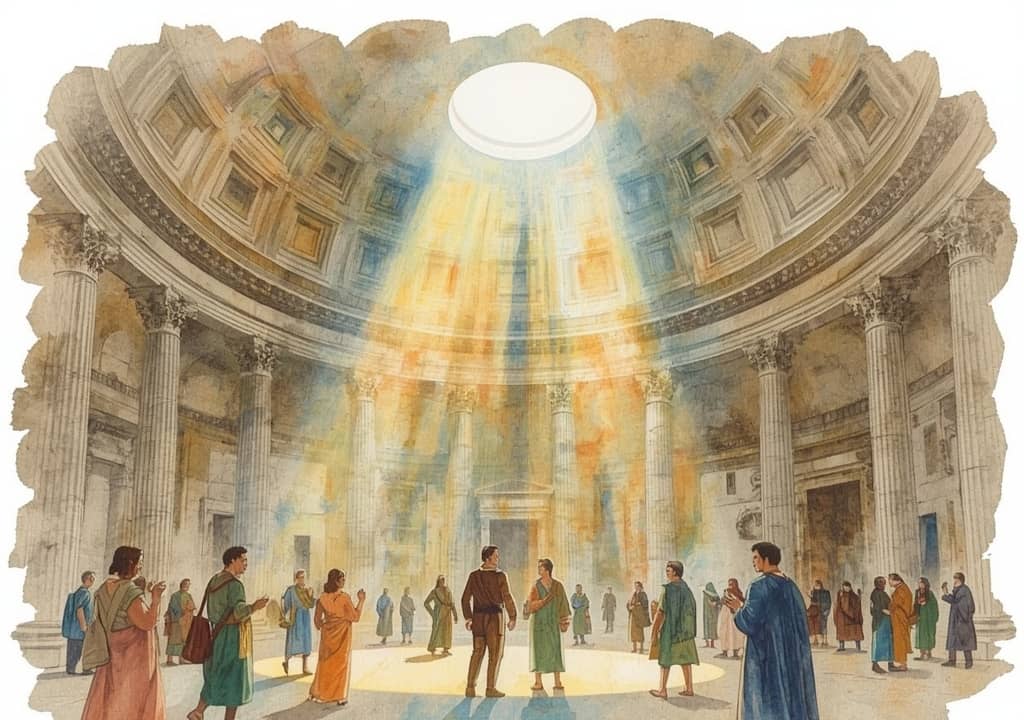
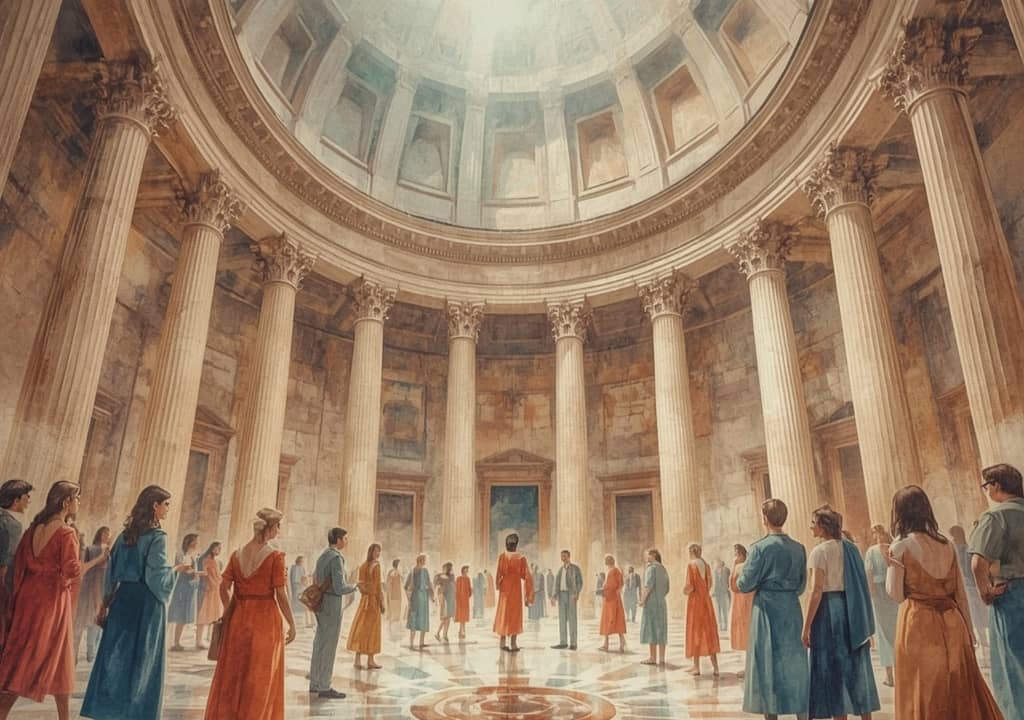
A friendly rumor says the Pantheon’s geometry is so balanced that if you stand near the center and look up, you’ll feel unusually calm and ‘in the right place.’ This isn’t a supernatural claim so much as an affectionate way to describe how symmetry, scale, and acoustics can shape a visitor’s mood.
Background
The Pantheon is celebrated for its harmonious design: the interior height and diameter are famously matched, creating a strong sense of unity. Over time, that architectural harmony became a small tourist tradition - ‘stand here and feel it.’
Impact On Visitors
It gives people a simple, fun ritual to try. Even skeptics often admit the space feels balanced and immersive, which makes the visit more personal and memorable.
Additional Details
Many visitors notice that quiet sounds carry in interesting ways, and the circular layout naturally draws your attention upward. The story turns those subtle impressions into a shareable moment: ‘Try standing right here and tell me how it feels.’
Frequently Asked Questions
The Pantheon is a 2nd-century AD Roman temple rebuilt under Emperor Hadrian, later converted into a church. It’s famous for its massive unreinforced concrete dome and the central oculus (open skylight), an engineering landmark of the ancient world.
It’s in Piazza della Rotonda, in Rome’s historic center. It’s easiest to reach on foot from central areas; common nearby stops include Largo di Torre Argentina (trams/buses) and Barberini (Metro A + walk). Taxis and ride-hailing can drop you close, but streets are often restricted.
Entry is ticketed. Buy official tickets online in advance when possible to reduce waiting, then pass security at the entrance. Carry a photo ID if requested during ticket checks.
Go early in the morning on weekdays or later in the afternoon; weekends and midday are busiest. Rainy days can be less crowded, but remember the oculus is open to the sky.
Plan about 30 - 60 minutes for a focused visit, or longer if you want to study details, visit side chapels, and take photos.
Don’t miss the dome and oculus, the coffered ceiling, the marble floors, the main altar, and notable tombs (including the painter Raphael). Look for how light moves through the interior as the sun shifts.
Yes - because the oculus is open, rain can enter. The floor is subtly sloped with discreet drainage holes designed to channel water away.
A popular loop is: Piazza Navona → Pantheon → Piazza Venezia/Capitoline Hill → Trevi Fountain → Spanish Steps (adjust order based on where you start). Everything is walkable, but expect cobblestones and crowds.
Bring comfortable walking shoes, a small bottle of water, and a light layer. Dress modestly (it’s an active church). Avoid large bags if possible for faster security screening.
Keep voices low and respect religious services. Photography is generally allowed without flash; tripods may be restricted. Follow posted signage and staff directions, especially during Mass.
The best historic core walk from the Pantheon
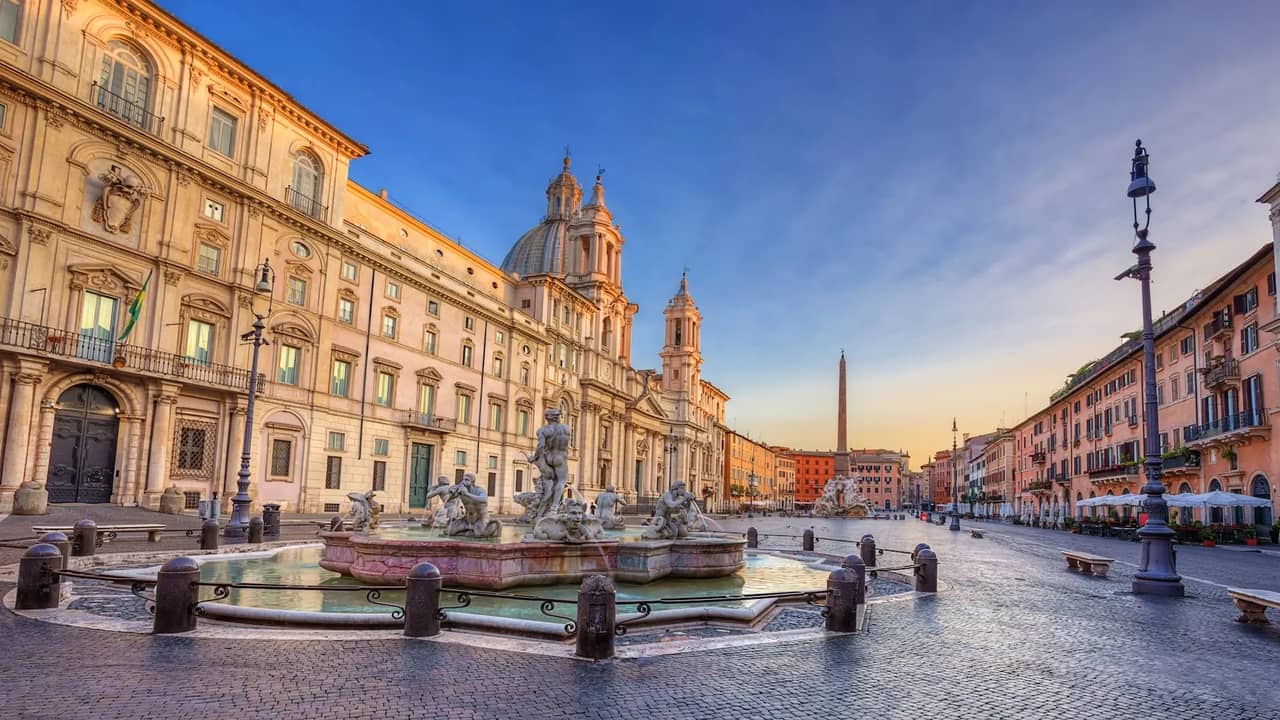
Everything You Need Before Visiting Piazza Navona
Few squares feel as theatrical after sunset as this one. Use our traveler-focused breakdown for the easiest experience: where it sits, when crowds thin out, what to pack for photos and comfort, quick myth-filled trivia, accessibility notes, and a practical FAQ to save time on arrival.
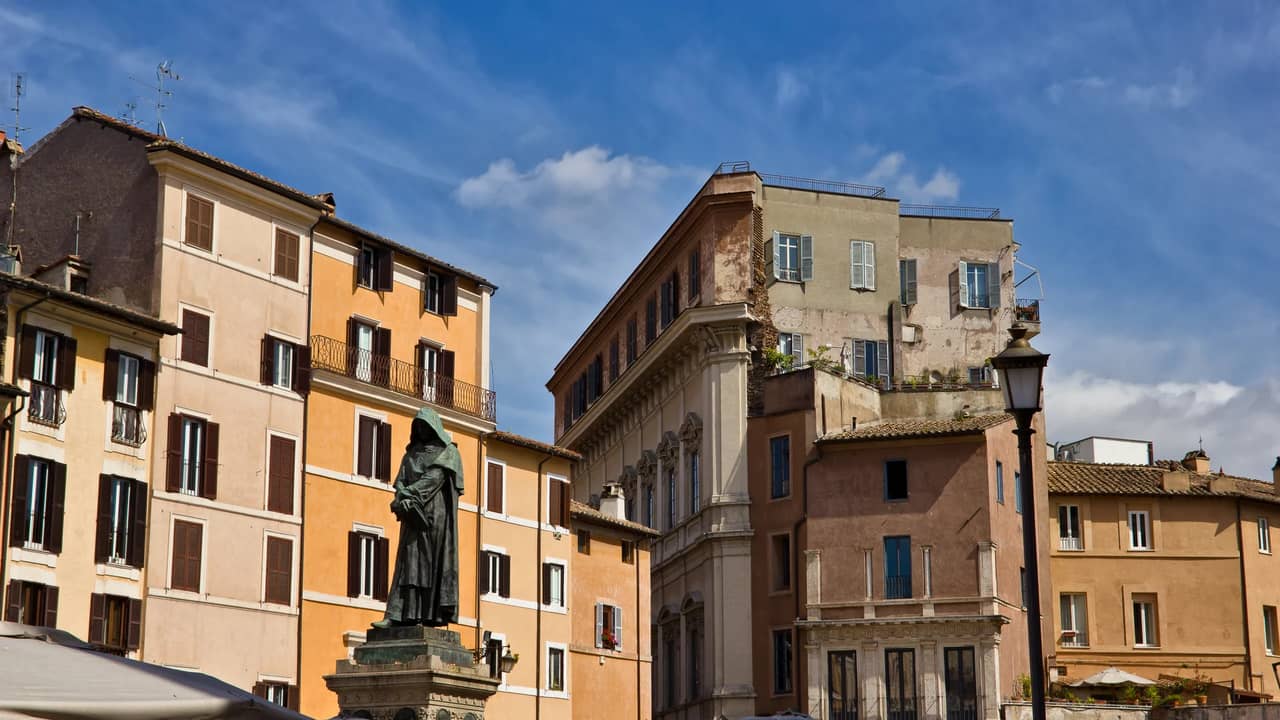
Everything You Need Before Visiting Campo de' Fiori
By day it’s a produce-packed market; after sunset it turns into a lively square. Use this article to time your stop, find the easiest routes, and know what to pack. You’ll also get quick notes on accessibility, safety basics, plus a few local myths and funny tales to listen for.
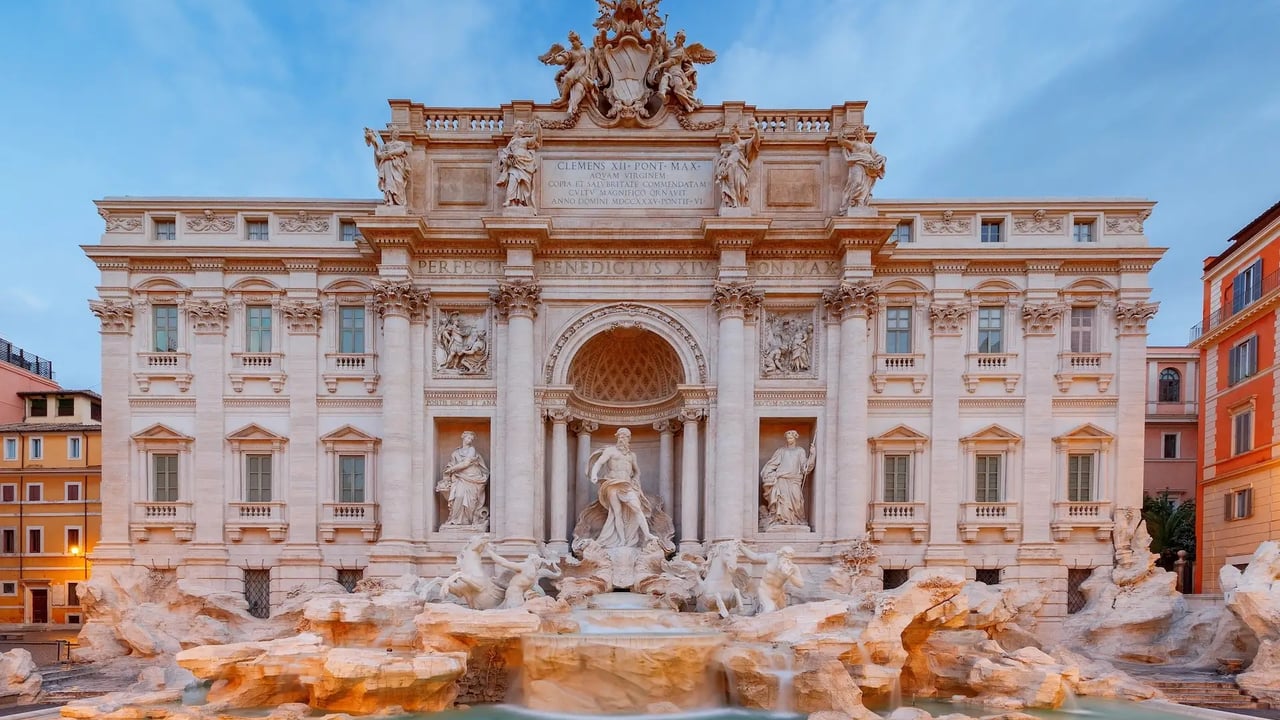
Everything You Need Before Visiting Trevi Fountain
It’s more than a backdrop - it’s a ritual. Learn where to stand for clearer shots, when to arrive for calmer moments, and what small essentials help in the splash zone. You’ll also find quick accessibility notes plus pointers on finding on-site guidance or a self-paced audio tour.